

Why Are Zinc Oxide Sunscreens So Popular? Protection Is About More Than Just SPF
When choosing sunscreen, most of us look at the same thing:
Is it SPF 30?
SPF 50?
Or even higher protection?
However, in recent years, questions about sun protection have started to change.
People are no longer only asking how much SPF a product has, but also how the product interacts with their skin.
Especially users with sensitive skin often ask:
“Does sunscreen penetrate into my skin, or does it stay on the surface?”
The answer lies in zinc oxide, one of the most important ingredients in mineral sunscreens.
Protection Starts on the Surface, Not Under the Skin
Zinc oxide is one of the mineral UV filters used in sunscreen formulations.
What makes it different is how it works.
Scientific studies show that zinc oxide particles largely remain in the outermost protective layer of the skin and mostly stay there.
In other words, zinc oxide does not perform its protective function deep within the skin, but at the very surface where UV radiation first makes contact.
For this reason, mineral sunscreens are often preferred by users who are more conscious about ingredients.
An Invisible Shield on Your Skin
UVA and UVB rays affect our skin not only in summer, but throughout the year.
UV exposure continues even on cloudy days, while driving, walking outside, or sitting near a window.
That is why sun protection is not seasonal, but a daily necessity.
This is also why zinc oxide sunscreens have become increasingly popular.
Protection starts on the skin’s surface.
Like an invisible shield.
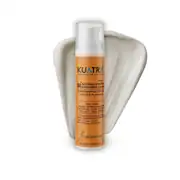
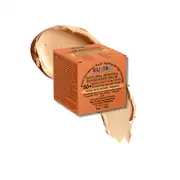
Why Do People Using SPF 50 Still Get Sun Damage?
Here is the interesting part.
Many people judge sunscreen effectiveness solely by its SPF number.
However, scientific research reveals a different reality:
Most people apply far less sunscreen than the amount used in laboratory SPF testing.
In lab conditions, a standardized amount of product is applied to the skin. In real life, however, users typically apply significantly less.
The result?
A product labeled SPF 50 may not actually deliver its expected level of protection in practice.
So the issue is often not the sunscreen itself, but how it is used.
Why Even the “Best” Sunscreen Sometimes Feels Ineffective
Imagine this scenario:
You buy a high-quality sunscreen.
It contains effective filters like zinc oxide.
It has a high SPF rating.
But:
- You don’t apply enough.
- You apply it right before going outside.
- You don’t reapply during the day.
- You miss areas like ears, neck, and hairline.
In this case, you may not benefit from the full potential of the product’s protection.
4 Golden Rules for Proper Sunscreen Use
1. Apply Enough
For face and neck, about two finger-lengths of product is recommended.
2. Apply Before Going Outside
It is important to create a protective layer before UV exposure begins.
3. Reapply Regularly
Sweating, swimming, and daily contact can reduce the protective layer.
4. Don’t Forget Often-Missed Areas
Ears, neck, nape, sides of the nose, and backs of the hands are common areas for sun damage.
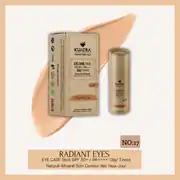
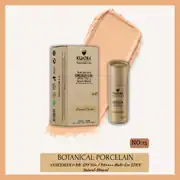
Why Are Consumers Focusing More on Zinc Oxide in Modern Sun Protection?
Today, users are no longer asking only “what SPF?”
They also want to know:
- How does the ingredient work?
- How does it interact with the skin?
- Is it suitable for daily use?
- Is it good for sensitive skin?
Zinc oxide is at the center of this interest because its mechanism is very clear:
It provides protection primarily at the skin’s surface.
Conclusion: Protection Is More Than SPF
Sun protection is not just about the SPF number on the label.
Real protection comes from:
✔ Choosing an effective UV filter
✔ Applying enough product
✔ Reapplying regularly
✔ Making sun protection a daily habit
The most notable feature of zinc oxide sunscreens is that they work on the surface of the skin.
However, the most important takeaway is this:
The best sunscreen is not just the one with the highest SPF, but the one you apply correctly every day.
At Kuatra, we see sun protection not as a seasonal product, but as an essential part of a healthy and strong skin barrier.
References
- Petersen B, Wulf HC. Application of Sunscreen: Theory and Reality. Photodermatology, Photoimmunology & Photomedicine. 2014;30(2–3):96–101. doi:10.1111/phpp.1209.
- Leite-Silva VR, Sanchez WY, Studier H, et al. Human Skin Penetration and Local Effects of Topical Zinc Oxide after Occlusion and Barrier Impairment. European Journal of Pharmaceutics and Biopharmaceutics. 2016;104:140–147. doi:10.1016/j.ejpb.2016.04.022.